Best Free Walking Tours in Bilbao
24 tours in Bilbao, Spain, in English and other languages






4,832 Reviews in Bilbao
What are the available times and days for the walking tours in Bilbao?
Bilbao tours usually run daily, with morning, afternoon, and evening departures, so you can choose a time that suits you.
How long does the typical walking tour last?
A standard tour lasts about two and a half hours, with stops for photos and historical stories. The pace of the walk is comfortable even for leisurely tourists.
What are the main attractions and neighborhoods covered during the Bilbao walking tour?
You will see Teatro Arriaga, San Nikolas Eliza, Euskaltzindia, as well as Eribera merkatua, San Anton Eliza, and Plaza Nueva. The guide will also take you through cozy squares and modern neighborhoods.
Is the tour suitable for children, seniors, or people with limited mobility?
Yes, the routes are usually designed to suit most guests, including families with children and seniors. For those with limited mobility, the guide will suggest where to take a short break. But in any case, it is better to check this on the tour description page.
In which languages are the Bilbao tours offered?
Tours are usually offered in Spanish and English. You can check the available options when booking.
Free Tours in Bilbao: Discover the City from the River to the Old Town
One of the best things about Bilbao is that you can explore the city's entire history in just a few hours. For that reason, many tourists book free tours in Bilbao as their first experience exploring a new city. You will see how the streets of Casco Viejo lead directly to the water, how the Nervión River leads to the Guggenheim Museum, and how an industrial shipbuilding area was transformed into the trendy shopping and dining district along Abandoibarra waterfront. Once you take a free walking tour in Bilbao with someone who lives there, it becomes easy to understand how these areas relate to one another.
Bilbao on Foot: Why the City's Story Works as a Walking Route
From Siete Calles to the Nervión River
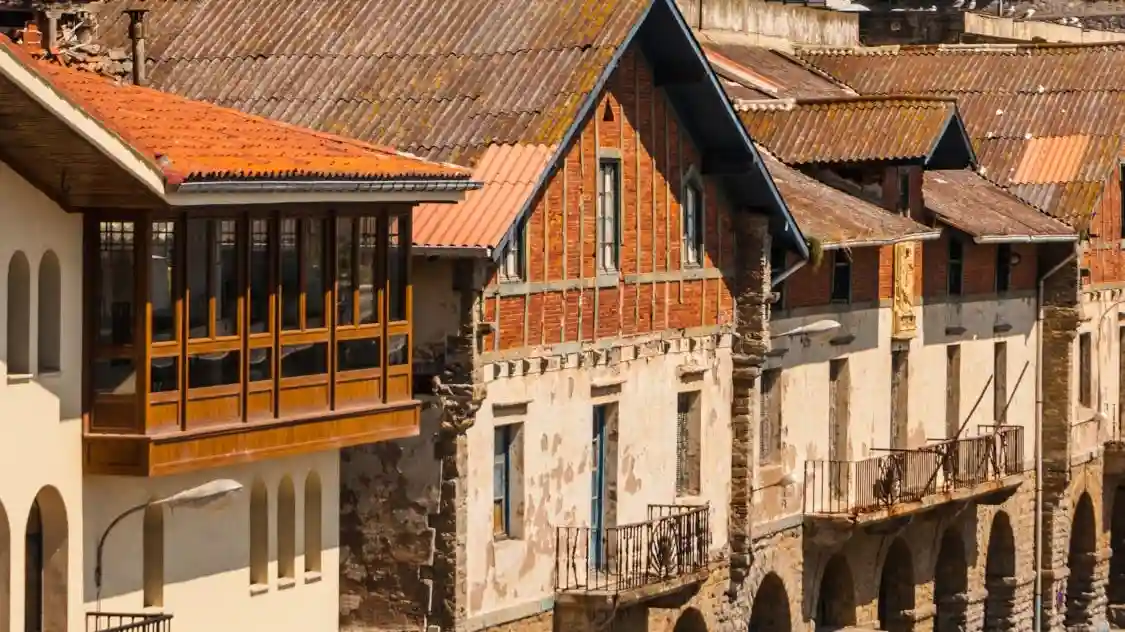
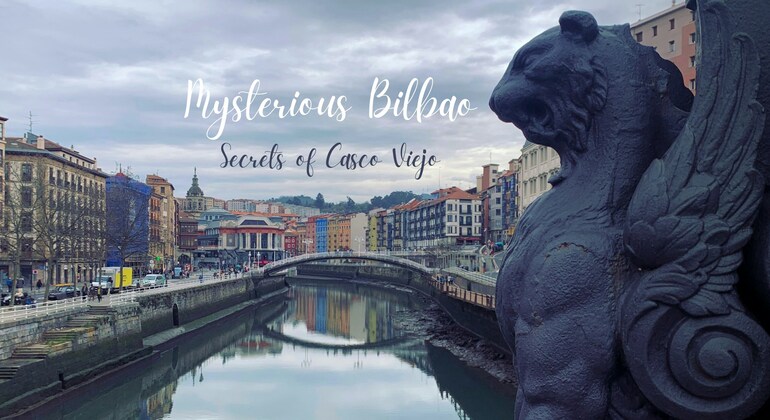
The area now called Casco Viejo was the location for the first settlement of Bilbao in 1300. The early settlers established their homes in an area referred to as the Siete Calles (seven streets). Today, each street is relatively narrow, framed by traditional wooden balconies, and houses many bars.
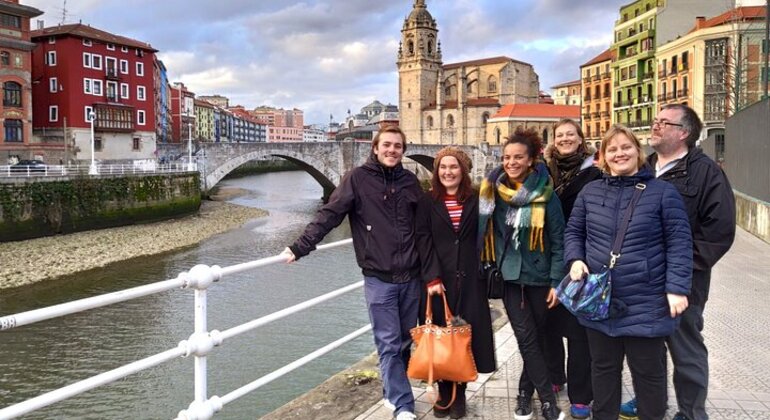
Just a short walk away, in the heart of Casco Viejo, lies Plaza Nueva — a neoclassical plaza built during the 19th century. In addition to being a popular spot for shopping, it also hosts a flea market every Sunday. In the same general vicinity is the Teatro Arriaga — the city's main opera house. The San Antón Church stands right next to the historic bridge of the same name, further upriver from Teatro Arriaga. This is where the city's original fortified bridge once stood. And inside the narrow streets of the Old Town, you can find the Santiago Cathedral.
From Port City to Design Landmark
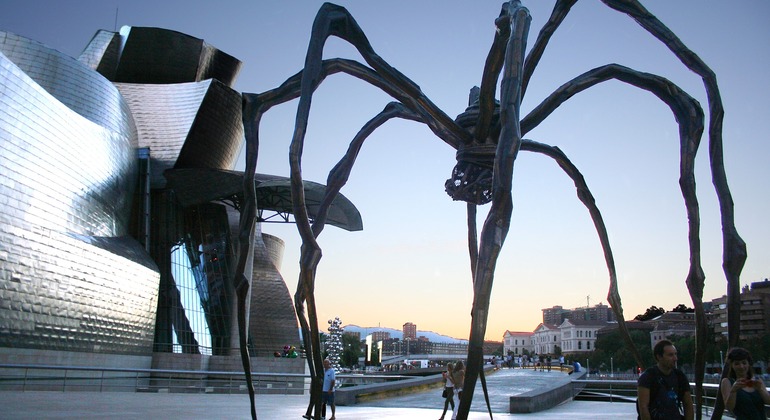
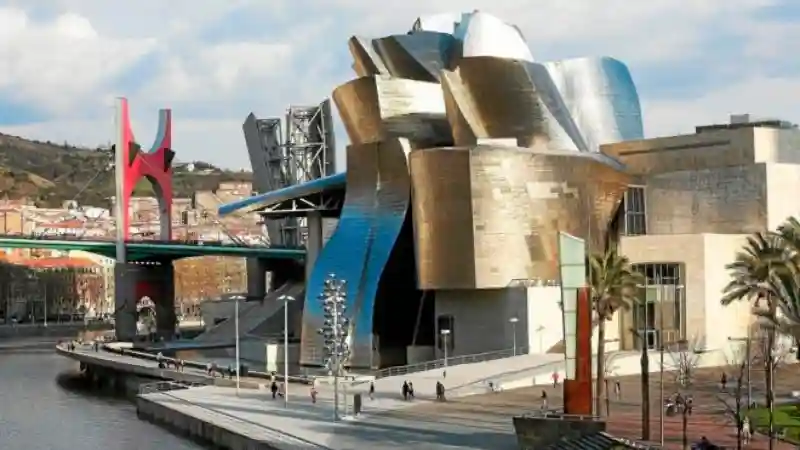
For much of the 20th Century, Bilbao had an industrial past. But it started fading in the 1990s, when the city’s authorities decided to invest in design and culture. In 1997, the Guggenheim Museum Bilbao opened and changed everything. Designed by architect Frank Gehry, the museum's titanium curves transformed a neglected riverfront site into one of the most photographed buildings in the world. This type of transformation has been coined the “Bilbao Effect” by economists, where a major landmark sets in motion a broader range of urban development.
Today, the city holds the UNESCO designation for Creative City of Design, and taking a walking tour in Bilbao is probably the best way to see it. In just 15 minutes following the water out toward Abandoibarra, you can go from cobblestone streets to glass and steel in what appears to be two different cities.
What You Can Understand Better on Free Walking Tours in Bilbao
Maps show you where some nice things are. Local guides explain what those things mean. That is the biggest benefit of free walking tours in Bilbao.
- How the Old Town shaped Bilbao. In 1300, the city began as a trading post, and today many aspects of Casco Viejo reflect the plans for markets and streets laid out at the time the city was first chartered.
- Why the river matters. The Nervión (also called Nerbioi in Basque) is an important part of the city. The river was the central hub from which all areas of the city developed, historically dividing the old town from the new business area.
- Why the museum changed the city's image. The Guggenheim wasn’t constructed as “just another” museum. It was intentionally built as a statement that cities can economically recover through architecture.
- How Basque identity appears in daily life. If you hear Euskara, if you see pintxos placed on bars at 8 pm, if you understand how much Athletic Club matters to locals, then you know how Basque culture expresses itself.
Main Areas Usually Connected in a Bilbao Walking Route
Casco Viejo and Plaza Nueva
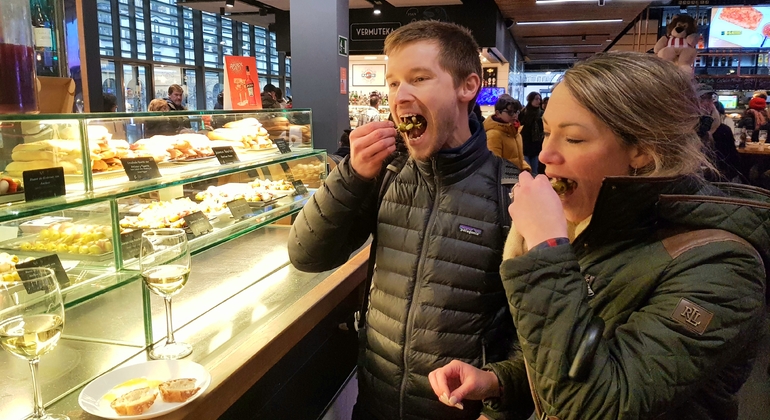
Most walking tours in Bilbao begin in the heart of the historic quarter, taking in Plaza Nueva before crossing the Arenal footbridge toward the newer parts of the city. The area surrounding these streets is where the pintxo-hopping culture (txikiteo) comes alive with residents moving from bar to bar instead of eating a full meal. By the way, Biscay is home to over a thousand restaurants, which is one of the largest concentrations within all of Europe.
Teatro Arriaga, San Nicolás and San Antón
Walking another block or so will lead you to the San Nicolás Church, which is an eight-sided Baroque church that was built after the previous chapel was destroyed by flooding in the 1700s. This reminds us how many times the riverfront community has been rebuilt. Buildings like Teatro Arriaga and San Antón mark the edges of the original walled town and frame the historic quarter.
La Ribera Market and the Riverbank
La Ribera Market is an Art Deco curved structure built in 1929. It spans over 10,000 m² of stalls for almost all types of food (from fish to cheeses). Since the market sits directly on the river estuary's edge, this is a great place to take a break and continue walking to the riverside promenade or back into the historic section of Bilbao.
Abandoibarra, Guggenheim and Modern Bilbao
Continuing northwest along the riverbank, you will see Santiago Calatrava's Zubizuri Bridge. Unfortunately, its glass surface had to have non slip coating applied many times since complaints were made about slippery conditions due to rain. A bit further downriver, you can cross the La Salve Bridge, which connects directly with the exterior design of the Guggenheim Museum. Right next to the Zubizuri Bridge stand two prominent residential towers named Isozaki Atea, which were designed by architect Arata Isozaki.
Bilbao Beyond the Guggenheim: Local Details a Guide Can Point Out
Walking through Bilbao allows you to see details. For example, Casco Viejo’s cobblestone streets lead to Arenal, which flows onto the riverside area before connecting to the modern district near Abandoibarra.
Most people simply pass by these areas. But a good guide will point them out, showing an older graffiti mark on a building, telling why some bridges are painted red while others have no paint at all, visiting a small bar that has served txakoli for many years, or answering why a football scarf hangs in a random window.
How to Choose the Right Free Tour in Bilbao
Not every free tour in Bilbao covers the same areas. Therefore, think in advance about what interests you most. Some tours include just the main attractions (Casco Viejo, Cathedral, River, Museum) while other tours may be more historically or culturally based, food focused, or even focus on areas of town most tourists overlook.
To make sure your experience is as enjoyable as possible, check the specifics of the tour such as:
- The exact route of the tour
- The meeting point
- What languages the tour will be conducted in
- How long the tour will last
- What travelers have written about their experience and their guide
FREETOUR.com has detailed information regarding each tour, including all of the above mentioned items.
Book a Bilbao Walking Experience Before You Explore Alone
There are so many routes in a city as big as Bilbao, and they have such rich histories and local tips that can be difficult to find out by yourself. This is why doing the free tour in Bilbao on your first day will allow you to see most of the city quickly and then go back to those squares or bars later when you are ready. So, simply choose which tour seems good to you, look at the route of the tour, book your spot, and enjoy your time in this city.

- Free Tours in 140+ countries!
- Trusted ratings & reviews!
- Free booking 100% guaranteed!
- FAQs about free tours in